Loading...
☕
Ethiopian Recipes
Rooted in the ancient highlands of East Africa, this cuisine builds its soul around bold spices, slow-cooked stews, and the irresistible tang of injera, a spongy sourdough flatbread that doubles as both plate and utensil. Berbere, niter kibbeh, and turmeric create layers of warmth and depth that feel unlike anything else on earth. Cooking Ethiopian food at home is a genuinely rewarding experience, especially if you love dishes that fill your kitchen with incredible aromas. It suits patient, curious cooks who enjoy building flavor over time, and it naturally lends itself to sharing meals communally, making it perfect for anyone who loves feeding a crowd.
8 recipes found

About Ethiopian food
Ethiopian food is shared food. A meal arrives as one large platter for the table: a round of injera with stews and vegetables spooned on top, and more injera rolled up on the side. There are no forks. You tear off a piece of injera with your right hand and use it to scoop up the food.
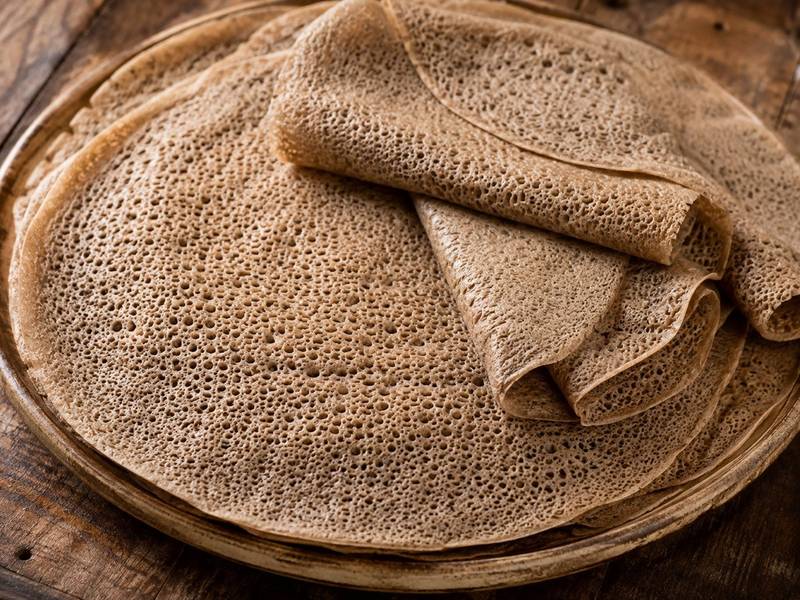
Injera: plate, spoon and bread in one
Injera is a thin, spongy flatbread made from teff, a tiny grain native to Ethiopia. The batter ferments for a few days, which gives injera its gentle sour tang and the bubbly surface that soaks up sauce. Nearly every dish below is eaten with it.
Recipes: Ethiopian injera
The flavor foundations
Three seasonings carry most Ethiopian cooking. Berbere is a brick-red blend of chili, fenugreek, ginger and warm spices. Niter kibbeh is butter slowly simmered with spices until it is fragrant and clear. Mitmita is a fiery blend of bird's-eye chili, served with kitfo. Look for them at Ethiopian markets; they make home cooking taste right.
Fasting food: why so much is vegan
Devout followers of the Ethiopian Orthodox Church fast on around 180 days a year, including most Wednesdays and Fridays and the weeks before Easter, eating no meat, dairy or eggs. The result is a deep tradition of vegan dishes built on lentils, chickpeas and vegetables. Order a beyaynetu (fasting combination) and you'll taste several at once.
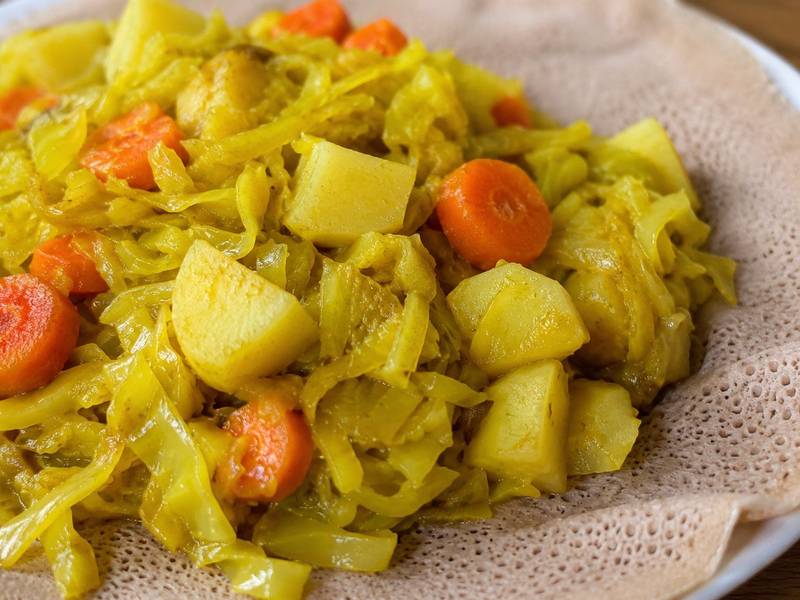
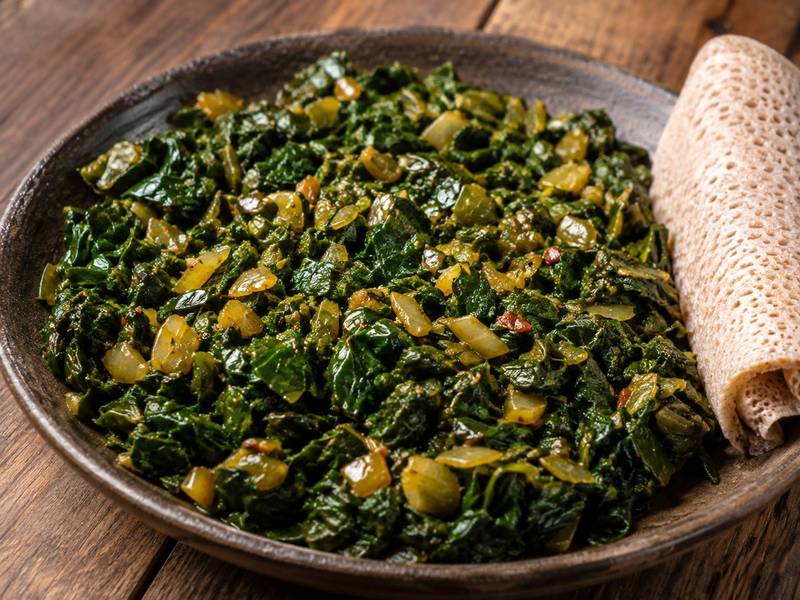
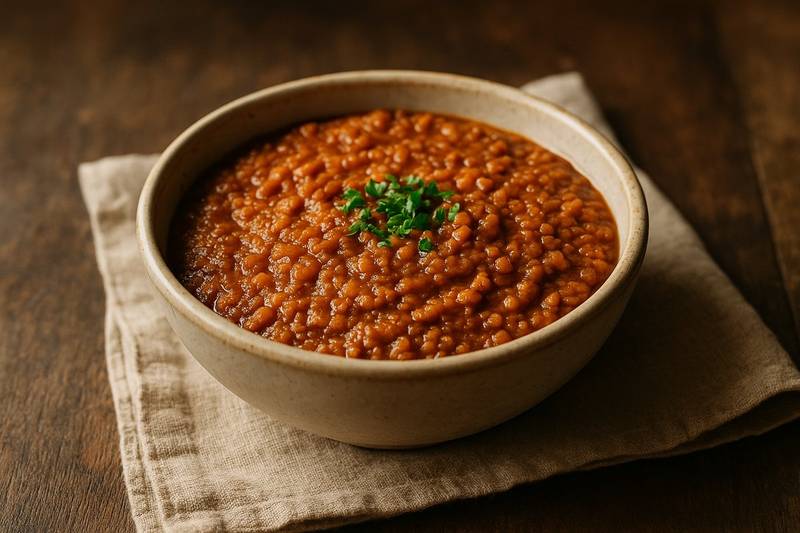
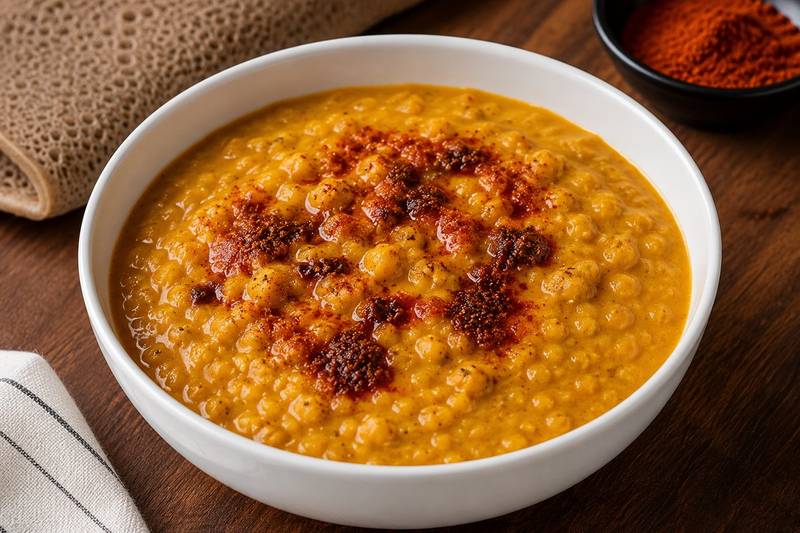
Recipes: Misir wat (red lentils) · Shiro wat (chickpea stew) · Gomen (collard greens) · Atkilt wat (cabbage, carrot, potato)
Feast dishes
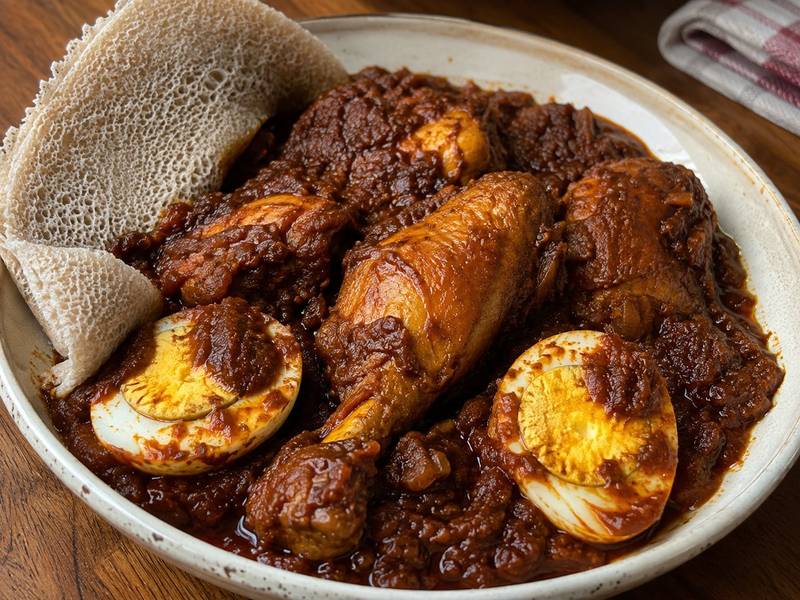
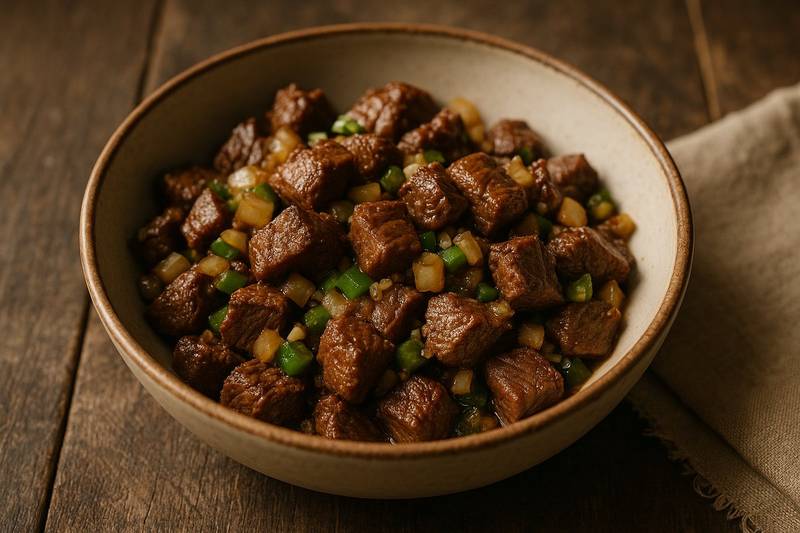
When the fast ends, the meat comes out. Doro wat, chicken and hard-boiled eggs slow-cooked in berbere and onions, is the celebration dish for holidays like Ethiopian Christmas and Easter. Tibs are quick-sautéed meat with onion and pepper, and kitfo is finely minced beef dressed with spiced butter and mitmita, served raw, rare or cooked.
Recipes: Doro wat · Tibs (sautéed beef) · Kitfo
Coffee, where it all began
Ethiopia is the birthplace of coffee, and buna is a ritual as much as a drink. In a coffee ceremony, green beans are roasted in a pan in front of guests, ground, and brewed in a clay pot called a jebena. The coffee is served in three rounds, often with popcorn and incense, and staying for all three is polite.