Loading...
SpanishMainGluten-Free
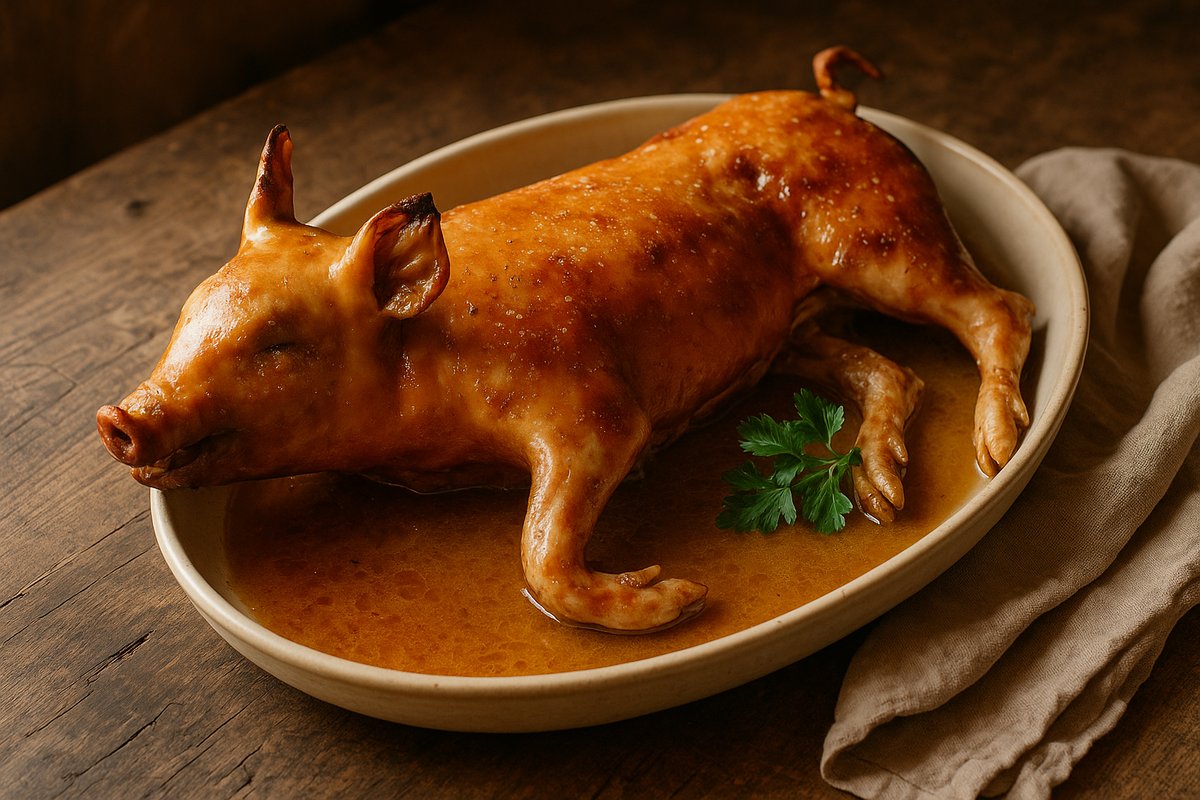
Cochinillo Asado (Baby Roast Pig)
Succulent baby pig roasted until the skin crackles and the meat falls from delicate bones, infused with garlic, white wine, and bay leaf aromatics. The low-and-slow cooking method ensures tender, juicy flesh contrasting beautifully with paper-thin, golden-brown skin. Perfect for special celebrations or when you want to impress with an authentic Spanish showstopper.
Ingredients
Units
Instructions
- 1
Remove the pig from refrigeration one hour before cooking to bring it to room temperature. Pat the entire surface completely dry with paper towels, paying careful attention to the skin, as moisture will prevent crackling.
- 2
Prepare a large roasting pan by pouring 2 cups (473 ml) of the white wine and 2 cups (473 ml) of water into the bottom. Place the roasting rack in the pan so the pig will sit above the liquid level.
- 3
In a small bowl, combine salt, black pepper, garlic, oregano, cumin, and paprika to create a dry rub. Rub this mixture thoroughly over the entire surface of the pig, both inside the cavity and outside, paying special attention to the legs and any crevices.
- 4
Preheat the oven to 350°F (175°C). Place the bay leaves and thyme sprigs inside the pig's cavity. Position the pig spine-side up on the roasting rack, with legs extended forward in a natural position.
- 5
Roast for 1 hour and 30 minutes, then increase the oven temperature to 425°F (220°C). Combine the remaining 6 cups (1.4 liters) wine with the vinegar and brush this mixture over the pig's entire surface every 15 minutes for the next 45 minutes to 1 hour, until the skin is deep golden brown and crackles when tapped.
- 6
The pig is done when the skin is uniformly crispy and golden, the meat registers 160°F (71°C) at the thickest part of the thigh, and the juices run clear when pierced. Total cooking time should be approximately 2 hours and 15 minutes to 2 hours and 30 minutes.
- 7
Remove the roasting pan from the oven and let the pig rest for 10 to 15 minutes before carving. Do not cover it, as this will soften the crackling.
- 8
While the pig rests, strain the pan drippings through a fine sieve into a saucepan. Skim fat from the surface and warm gently over low heat. Season to taste with salt and pepper. This will become your sauce.
- 9
To carve, use a sharp knife and cut away the front legs first, then the hind legs. Separate the ribs from the spine and cut into sections. Cut the meat from the ribs and serve immediately while still warm, with the crackling skin broken into pieces.
- 10
Serve the carved cochinillo on a warm platter, drizzle the pan sauce over the meat, and present the whole arrangement at the table before plating individual servings. Accompany with the warm sauce on the side.
Reviews
Loading reviews…