Loading...
MoroccanMain
Easy Moroccan Rfissa (Chicken with Msemen and Fenugreek)
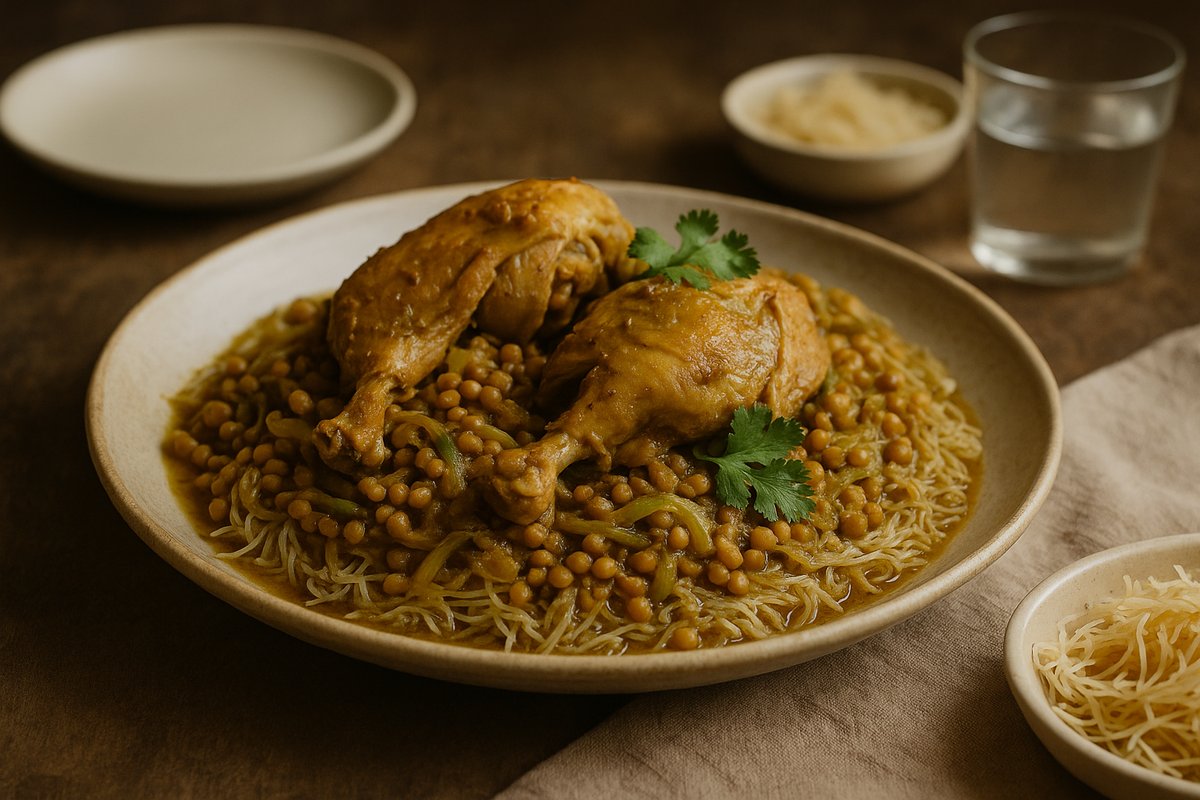
Rfissa takes a completely different approach to the idea of a meal in a bowl. Instead of broth with things floating in it, you start with the bread — torn msemen laid across the base of a platter — and the broth soaks through it, turning the flatbread into something soft and deeply savoury, swollen with all the spices and fat and fenugreek that went into the pot. The chicken is almost secondary. What you're really eating is the bread and the broth together, which is why every bit of flavour you build in the pot matters. The fenugreek is the ingredient that makes rfissa taste like rfissa. It's sharp and slightly bitter, with a strange sweet warmth underneath that people often describe as maple-like — and it perfumes the whole dish. Soaking the seeds for at least 30 minutes (overnight is better) pulls out some of the harshness, leaving a cleaner, rounder flavour in the broth. Don't skip this step. Traditionally, rfissa is made with trid — a tissue-thin pastry steamed and stacked in layers — or with msemen, the flaky, layered square flatbreads found at every Moroccan breakfast table. For a weeknight version that doesn't require making bread from scratch, a good thick flour tortilla works better than you'd expect. It won't be trid, but it soaks the broth correctly and disappears into the dish the right way. Rfissa is a dish for celebrations and long family lunches. It's rich, slow-cooked, and has the kind of depth that gets slightly better as the bread absorbs more broth while you're eating.
Ingredients
Units
Instructions
- 1
Soak the fenugreek seeds in cold water for at least 30 minutes or overnight. Drain well before using — this softens them and takes the sharp edge off their bitterness while keeping their distinctive warmth.
- 2
Heat the olive oil in a large, heavy-bottomed pot over medium heat. Add the onion and cook, stirring regularly, for 8–10 minutes until completely softened and beginning to turn golden.
- 3
Add the garlic, ginger, turmeric, ras el hanout, cinnamon, black pepper, and salt. Stir for 1 minute until the spices are fragrant and coating the onions.
- 4
Add the chicken pieces and turn to coat thoroughly in the spiced onion mixture. Cook for 4–5 minutes, turning occasionally, until lightly browned on all sides.
- 5
Pour in the saffron and its soaking water, then add the stock. Nestle the herb bundles into the pot. Bring to a boil, then reduce the heat to low, cover, and simmer for 40 minutes.
- 6
Remove the lid. Add the drained lentils and soaked fenugreek seeds, stirring to combine. Continue simmering uncovered for 30–35 minutes, stirring occasionally, until the lentils are completely tender and the broth has thickened and turned a deep golden colour. The broth should be rich and flavourful — taste it and adjust salt if needed.
- 7
Lift the chicken pieces out of the pot. Pull the meat from the bones in large shreds, discarding the skin and bones. Return the shredded chicken to the pot and stir through. Remove and discard the herb bundles.
- 8
Tear or cut the msemen or flatbreads into rough 5–6 cm pieces. Spread them across the base of a wide, deep serving platter or divide them between individual wide bowls.
- 9
Ladle the hot broth, lentils, fenugreek, and chicken generously over the bread. You want it thoroughly soaked — almost porridge-like in places — but with some texture remaining. The bread will continue to absorb as you serve.
- 10
Arrange any remaining shredded chicken across the top. Scatter over fresh coriander leaves. Bring the remaining pot of broth to the table so everyone can add more as they eat. Serve immediately.
Reviews
Loading reviews…