Loading...
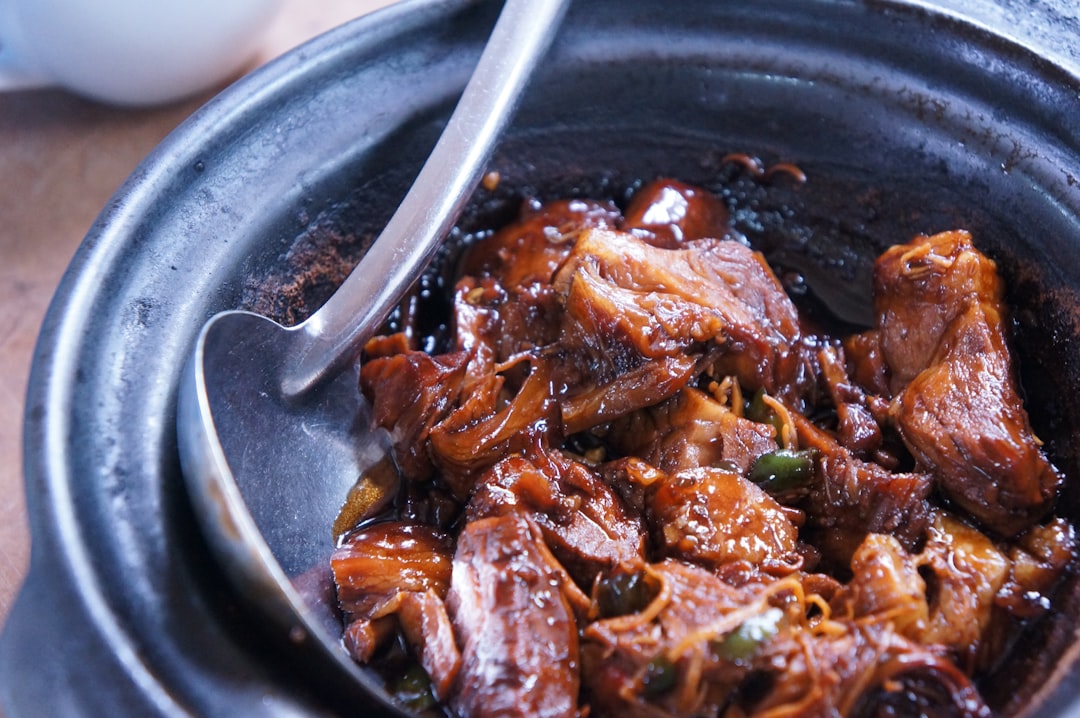
Photo by Yvonne Lee Harijanto on Unsplash
Chinesemaindairy-free
Twice-Cooked Pork (Hui Guo Rou)
Hui Guo Rou is a cornerstone of Sichuan cuisine, originating in Chengdu, where it has been served in home kitchens and teahouses for centuries. Pork belly is first simmered whole, then sliced and returned to a blazing wok where it curls into tender, caramelized bites lacquered in a glossy, spicy-savory sauce of doubanjiang and fermented black beans.
Ingredients
Units
Instructions
- 1
Place the pork belly skin-side down in a medium pot and cover with cold water. Add the ginger slices, knotted scallions, and Shaoxing wine. Bring to a boil over high heat, skimming any grey foam that rises to the surface.
- 2
Reduce heat to medium-low, cover partially, and simmer the pork belly for 35 to 40 minutes, until a chopstick pierces the thickest part with only slight resistance. The pork should be cooked through but still firm enough to slice cleanly.
- 3
Remove the pork belly from the pot and let it cool completely at room temperature for at least 20 minutes. Once cooled, slice it crosswise into pieces approximately 3mm (1/8 inch) thick. The thin slices will curl attractively in the wok.
- 4
Heat a wok over high heat until it begins to smoke lightly. Add the neutral oil and swirl to coat. Add the sliced pork belly in a single layer and stir-fry for 2 to 3 minutes, until the fat turns translucent and the edges begin to curl and lightly brown. Push the pork to the side of the wok.
- 5
Add the doubanjiang and chopped douchi to the cleared center of the wok. Stir-fry the pastes for 60 seconds until fragrant and the oil turns a deep red color from the chili.
- 6
Add the sweet bean paste, dark soy sauce, light soy sauce, and sugar. Toss everything together to coat the pork evenly in the sauce, stir-frying vigorously for 1 minute.
- 7
Add the green bell pepper pieces and leek to the wok. Stir-fry over high heat for 2 to 3 minutes, tossing constantly, until the vegetables are just tender-crisp and well coated in the sauce. Do not overcook—the leek should retain a slight bite.
- 8
Taste and adjust seasoning with a small pinch of sugar if the doubanjiang is very salty. Transfer immediately to a serving plate and serve hot with steamed white rice.
Reviews
Loading reviews…