Loading...
Italianmain
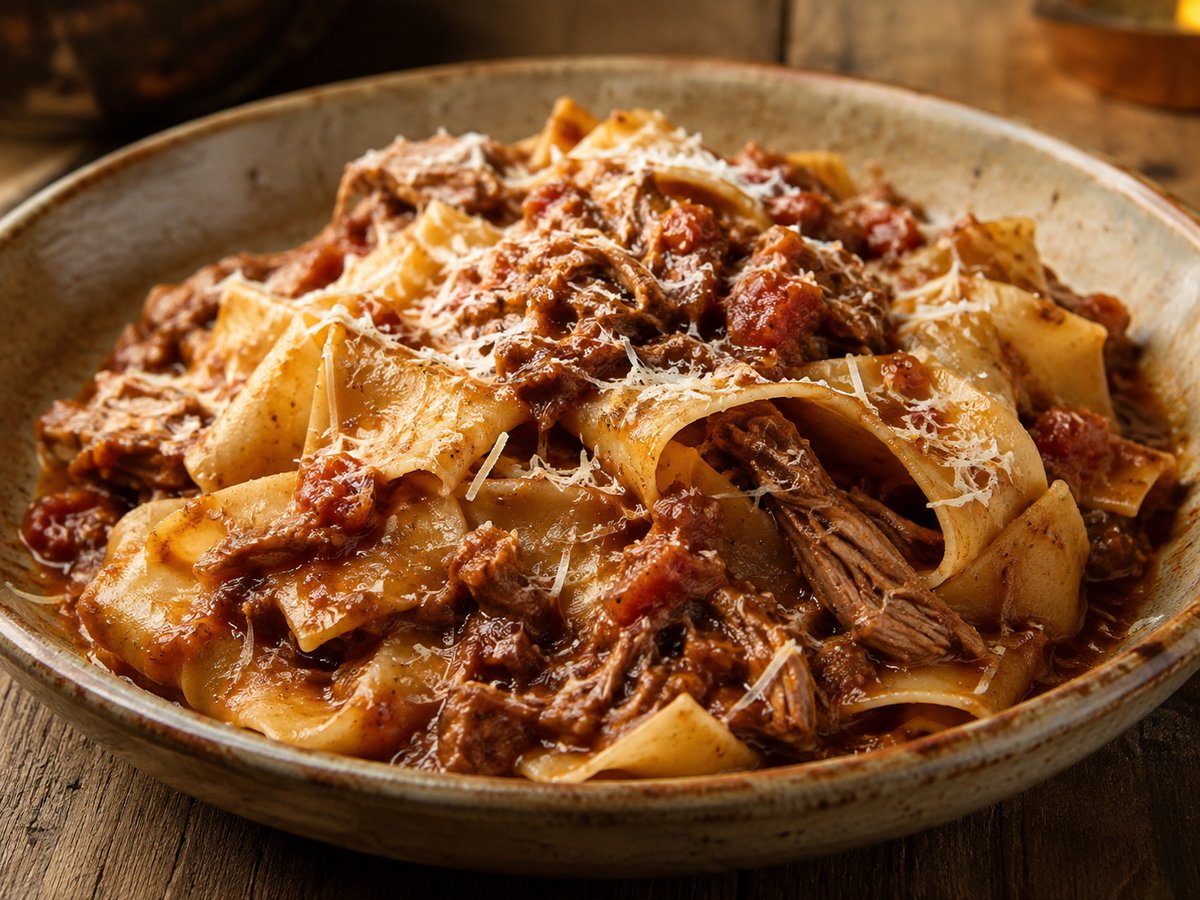
Pappardelle al Ragù di Cinghiale
This slow-braised wild boar ragù is a cornerstone of Tuscan cucina povera, born in the forests of the Maremma and Chianti regions where cinghiale roam freely and hunters have fed their families this way for centuries. The meat is marinated in red wine overnight, then cooked low and slow until it collapses into a rich, deeply savory sauce that clings to wide ribbons of egg pasta.
Ingredients
Units
Instructions
- 1
The evening before cooking, place the wild boar chunks in a large non-reactive bowl. Pour the entire bottle of red wine over the meat, then add the rosemary sprig, bay leaves, cloves, and peppercorns. Cover tightly with plastic wrap and refrigerate for at least 12 hours, or up to 24 hours, turning the meat once halfway through.
- 2
Remove the boar from the marinade and pat each piece thoroughly dry with paper towels. Strain the marinade through a fine-mesh sieve, reserving the liquid and discarding the whole spices and herbs.
- 3
Heat the olive oil in a large, heavy-bottomed Dutch oven or terracotta pot over medium-high heat. Working in two batches to avoid crowding, sear the boar pieces for 3 to 4 minutes per side until deeply browned on all surfaces. Remove the browned meat to a plate and set aside.
- 4
Reduce the heat to medium and add the diced onion, carrot, and celery to the same pot. Cook, stirring occasionally and scraping up any brown bits from the bottom, for 8 to 10 minutes until the vegetables are completely softened and beginning to turn golden. Add the minced garlic and sage leaves and cook for 1 minute more until fragrant.
- 5
Add the tomato paste and stir it into the vegetables, cooking for 2 minutes to allow it to caramelize slightly. Return the seared boar to the pot, then pour in the reserved strained marinade. Bring to a vigorous boil and cook for 5 minutes to cook off the harsh alcohol.
- 6
Add the crushed San Marzano tomatoes, 1 teaspoon of salt, and 1/2 teaspoon of black pepper. Stir everything together, then reduce the heat to the lowest possible setting. Cover the pot and braise for 2.5 to 3 hours, checking every 30 minutes and adding a small splash of water if the sauce becomes too dry, until the boar is completely tender and falling apart.
- 7
Remove the pot from the heat. Using two forks, shred the boar meat coarsely directly in the pot, pulling apart the larger chunks while leaving some texture in the ragù. Taste and adjust the seasoning with salt and pepper. If the sauce appears too thin, simmer uncovered over medium heat for 10 minutes to reduce.
- 8
Bring a large pot of water to a rolling boil and season it generously with salt until it tastes like the sea. Cook the pappardelle according to package instructions, or for 2 to 3 minutes if using fresh pasta, until al dente. Reserve 120ml of the starchy pasta cooking water before draining.
- 9
Add the drained pappardelle directly to the pot of ragù over low heat. Toss vigorously to coat every ribbon of pasta, adding the reserved pasta water a splash at a time to loosen the sauce and help it emulsify and cling to the pasta. The final texture should be saucy but not soupy.
- 10
Divide the pappardelle among four warmed shallow bowls, twisting the pasta into a nest using tongs. Spoon any remaining ragù over the top, finish with a generous grating of Parmigiano-Reggiano, a scatter of fresh parsley, and a thin drizzle of extra-virgin olive oil. Serve immediately.
Reviews
Loading reviews…